Inspirational itineraries in each and every region of Italy.

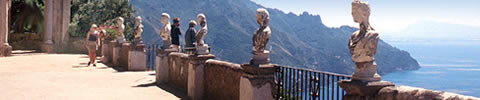
The journey along the spectacularly panoramic sea-edge road which hugs the cliffs of Italy's Amalfi Coast is, itself, one of the most memorable moments of any holiday spent on the "Divina Costiera".

Gazing out towards the sea, the towns dotted along the Amalfi Drive rise up from amidst the rocks like a collection of intricate, Neapolitan Nativity scenes. Positano, with its maze of little lanes lined with elegant fashion boutiques; Amalfi, ancient Marine Republic dominated by its magnificent cathedral; Ravello, home to stately cliff-top mansions, romantic gardens, and music festivals of international renown; and Furore, tiny fishing village and famous retreat of the stars of the silver screen, these are just a few of the jewels adorning the Amalfi Coast.

Each and every town and village on the Amalfi Coast is steeped in century upon century of history, littered with the traces left behind by the ancient Greeks and Romans, by the Arabs and Byzantines. These civilizations all profoundly influenced the architecture, culture and popular traditions of this part of Italy, today one of the world's most sought after holiday destinations, and home to any number of luxury hotels and villas. A vacation along the Amalfi Coast might easily take holiday-makers all the way to the Cilento, where nature reigns supreme, and where the warm waters of the Mediterranean sea gently caress the secluded bays and secret beaches of one of the most beautiful stretches of the Italian coastline.

Most popular


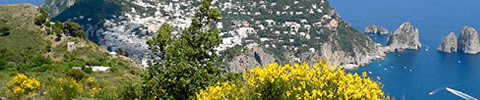
Rising up out of the sea just off the far end of the Sorrentine peninsula, the island of Capri has long been the Bay of Naples' most desirable, and glamorous destination. Preferred playground of the rich and famous since Roman times, Augustus found Capri's enchanting landscape the perfect antidote to the stresses of office; Tiberius even moved the imperial capital here, and transformed the island in magnificent theatre for his infamous "royal" revelries. In the early 1900's the island's name became synonymous with the moneyed and artistic elite who began to arrive on Capri’s shores. This was the time when, on the coast of Anacapri, the Grotta Azzurra was "discovered", adding yet another attraction to the island's long list of stunningly beautiful sites.

Most popular


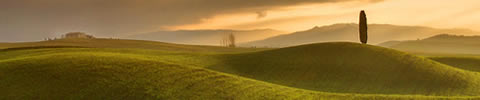
Of all the regions of Italy, Tuscany has by far the greatest concentration of artistic and architectural masterpieces: artworks dating from medieval times to the Renaissance and beyond, which are proudly displayed within the walls of both the region’s magnificent old cities and the tiny hilltop towns which punctuate Tuscany’s much painted landscapes.

For many, Tuscany is associated with the gently undulating profile of the Chianti hillside, the taste of fine wine, and the golden green color of its rolling fields and highly prized extra virgin olive oil. For others, memories of Tuscany are linked to the sweet perfume of the countryside surrounding Siena and the shimmering sea of Versilia. For all who come here, or dream of doing so, Tuscany represents a magical place in which both man and nature seem to have been inspired by the same quest for perfection. Whether it be a landscape, a cathedral, or a painting; in Tuscany everything appears to have been blessed with the same gift of beauty.

The homeland of great masters of 14th, 15th and 16th century art, such as Giotto, Donatello, Botticelli, Leonardo da Vinci, and Michelangelo; Tuscany is the birthplace of the Renaissance. It was here also, in the midst of great cultural and political ferment, that the writings of Dante, Petrach and Boccaccio led to the birth of the Italian Language, a language now studied and protected by the "Accademia della Crusca". In Tuscany every village, town and city is still happy to tell the story of its glorious past: whether it is in Florence, the Tuscan capital and city of the Medici; in Pisa, once home to the powerful Marine Republic; enclosed within the massif perimeter walls of Lucca; in the contrade which compete for the Palio of Siena; or in the shadow of the soaring towers of San Gimignano.

Most popular


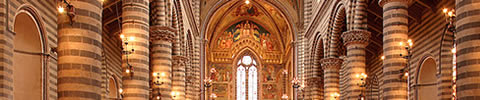
Many of those visiting Umbria come to the conclusion that St. Francis, the great, gentle, and poetic Saint of content and simplicity, known for his love of the natural world, could not possibly have been born anywhere else. Indeed there is no lack of religious sentiment in this "spiritual heart of Italy", the enchanting green landscapes of which are dotted with any number of ancient chapels, churches, and abbeys. This small, land-locked region is rich in little hill towns and beautifully preserved Medieval cities, each and every one conserving stunning works of art and architecture, and its own unique gastronomic traditions.

Most popular


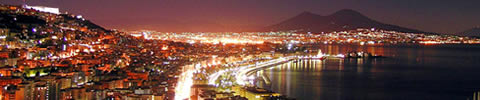
A wonderful climate, a spectacular sea, and magnificent cities constructed centuries ago by the ancient civilisations who passed through the gulf, leaving behind them the traces of their art and architecture. The Bay of Naples, rich in archaeological, artistic, and monumental works, is renowned for the warmth of its inhabitants and their passion for music, dance, and the dramatic arts. From the vibrant and densely populated city of Naples to the elegant Sorrento and the ruins of Pompei, the bay offers a series of unique and unforgettable town and seascapes. Vying with the beauties of the mainland, across the water lie the three small islands of the gulf – Procida, Ischia, and Capri.

Most popular


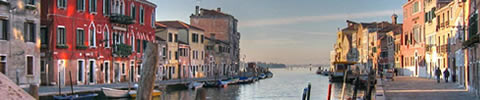
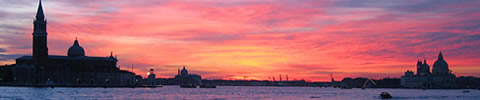
St Mark’s Square, the Grand Canal, the Bridge of Sighs, the art museums, the carnival, the gondolas, the lace of Burano, and the glass of Murano, all contribute to the charm of the ancient capital of the "Serenissima".

A powerful economic force for over eleven hundred years, Venice formed an important bridge between the east and west, where both goods and cultural traditions were exchanged, as can be witnessed in the arabesque motifs in the churches, or the Byzantine mosaics which adorn public, private and ecclesiastical buildings. An ancient city which enthusiastically embraces the modern world, Venice is home to both buildings filled with 16th century masterpieces and to the biennale, where artworks by the world’s most innovative living artists are exhibited.

Most popular


In the 15th century, the Renaissance led to sweeping changes being made throughout Europe, but it was in Florence, the city where the cultural movement began, that the "rebirth" would have the most pervasive and lasting impact.

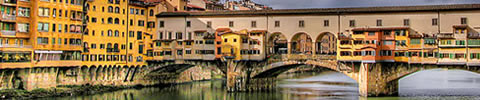
The city's writers, painters, architects, and philosophers all contributed to making Florence a model of Renaissance culture. The Renaissance has been described as the bridge between the middle ages and modernity; and in Florence, more than in any other city, the new perception of the world propelled man, at long-last as protagonist, head-first towards the future. The Medici family were responsible for great part of Florence's monumental words of architecture, from the Uffizi to Ponte Vecchio, Palazzo Pitti, and Piazza della Signoria, and commissioned many of the artistic masterpieces (by the likes of Michelangelo, Leonardo, Donatello, Brunelleschi and Botticelli), now conserved within the Tuscan capital's museums, churches, galleries, and piazzas.

If much of the appeal of Florence lies in its past, be it that of the Etruscans, the Guelphs and the Ghibellines, or the Granducato of Tuscany; this city stretching out along the banks of the Arno, has never once lost its desire for change and is still driven by a thirst for renewal which, every two years, during the Florence Biennale of Contemporary art, transforms the city’s Medici Fortress in laboratory of global creativity.

Most popular


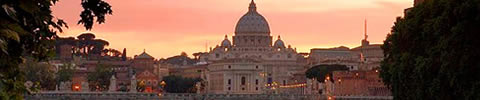
Capital of the Roman empire, the Catholic church, and modern-day Italy, this city built on seven hills along the banks of the Tiber river is, arguably, the most visited in the world.

Today’s tourists are able to stand in awe in front of the great monuments of ancient Rome largely thanks to Mussolini’s obsession with Rome and Roman-ness . Not content with building a whole new district (EUR) on the southern edge of the city, the fascist dictator bulldozed his way through the heart of the capital; demolishing the crumbling proletarian tenement blocks which had been suffocating sites such as the Coliseum and Imperial Forum, in order to make way for his triumphal Via dei Fori Imperiali and "liberate" the city’s most magnificent Roman ruins.

Eighty years on, modern day Romans seem remarkably nonchalant about the immensity of the ancient antiquities, churches, and monuments which line their city’s streets. Despite the wealth of historical and artistic masterpieces conserved within its walls, Rome is, in fact, far from being a museum. As is testified by life in the districts of Testaccio and Trastevere, Rome is a wonderfully vibrant city, brimming with colorful markets, noisy bars and crowded restaurants…. and even the occasional work of striking, contemporary architecture.

Most popular


Lazio is a region home not only to Rome, Italy’s majestic Capital city, but also to a coast lined with fabulous bathing resorts and a countryside scattered with enchanting little towns and villages.
 Inland, surrounded by the spectacular scenery of the Castelli Romani and the Ciociaria, it is easy to find towns where centuries-old popular traditions are still passionately observed, towns such as Viterbo, Fiuggi and Tivoli. Then there are the region’s woods, lakes, thermal waters, Mount Terminillo and the Etruscan cities of Tarquinia and Cerveteri. In the summer, Lazio’s seaside resorts, draw holiday makers from near and far, all eager to bathe in the sunshine and take a dip in the crystal clear sea.


Most popular


A rocky crescent of land embracing the Mediterranean sea, the sea which has played, and continues to play, an important role in the history of Liguria and in the lives of the people who inhabit it.

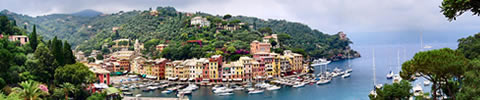
Squeezed between the Marine alps and the sea, Liguria is one, unending Riviera. From Levante to Ponente, the region's shores are dotted with a succession of pretty coastal towns, busy fishing villages, dramatically beautiful beaches and tiny bays hidden away between the rocks. Over the centuries, with almost biblical perseverance, man has slowly reclaimed minuscule portions of land from the ocean, accumulating little pockets of terrain to grow the sweetest of fruits and vegetables and on which to build the towns of Cinque Terre, Portofino and Sanremo.

The sea has been the source of Liguria's wealth and prosperity, ever since the era of the Marine Republic of Genoa, a time when Ligurian sailors ventured across the waters and founded colonies throughout the Mediterranean, from Gibraltar to the Aegean, and as far as the Black Sea. Today, the historic "lanterna" lighthouse continues to blink above the port of Genoa, which was given a stunning new look by the internationally acclaimed, Genoa-born architect, Renzo Piano, to coincide with the 1992 commemorations of the city's most famous navigator, Christopher Columbus. A tangible sign of the respect which the Ligurians have for their land and sea, natural parks and marine reserves have been created to protect the region's coastal environment and marine life. The Golfo Paradiso, Riviera dei Fiori, Tigullio, Golfo dei Poeti, Riviera delle Palme, these are just some of the wonders which await visitors to Liguria.

Most popular


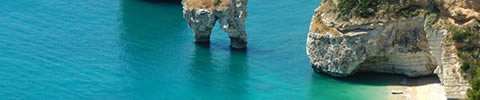
Puglia is an enticing concoction of fanciful baroque churches and austere Romanesque castles, magnificent stone farmhouses and tiny, beehive-shaped cottages, ancient olive trees and enchanting bays: all of which come together as if caught up in one of the region's cathartic "pizzica" dances: designed to energetically shake off the pains of living.

There are those who come to Puglia responding to the call of the sun-drenched beaches of the Gargano and Salento; others who arrive following the trail of the region’s intriguing past, which starts with the prehistoric man of Altamura, and continues with the advent of the Daunia civilization, the settling of colonies from ancient Greece and Rome, the reign of Frederick II, and the Spanish Bourbon dominion; others still are drawn to this part of southern Italy by the colors and aromas of its exciting and wonderfully varied cuisine, which perfectly captures and exalts the flavors of both land and sea.

As visitors travel across Puglia's fertile countryside, over rolling hills and vast, flat plains, all of which, sooner or later, inevitably meet either the Adriatic or Ionian sea, a series of unexpected jewels appear: the immense Cathedral of Trani, the picturesque "trulli" of Alberobello, the dazzling white townscape of Ostuni, the poignantly beautiful landscapes of Murgia, the baroque flamboyance of Lecce, the vineyards of Manduria, and the remote beaches of Santa Maria di Leuca. It is in Puglia's farmhouses or "masseria" that the ancient traditions dear to the population are perhaps best conserved: an intoxicating mixture of the sacred and the profane, professed in the form of archaic rituals which, on hot summer evenings, might well be performed beneath the olive trees, to the compelling rhythm of the "taranta".

Most popular


In the heart of the Mediterranean there lies an ancient island, an immense melting pot of civilizations and cultures, where magnificent cities, enchanting coastlines, and menacing volcanoes are to be found: an ancient island called Sicily.

The ancient Greeks, the Byzantines, the Arabs, the Normans and the Aragons all left traces of their passage through Sicily, from Messina to Palermo, from Agrigento to Siracusa, in the form of temples, gardens, churches, castles, and, at times, entire cities, in which centuries of art, culture and popular traditions now merge. As a modern day tourist destination Sicily is, above all, famous for its clear, blue sea, for the shimmering warm waters which lap the shores of the Italian island's small coastal villages and splendid seafront cities. From these waters any number of tiny islands emerge: the volcanic islands of the Aeolian archipelago, Favignana, and the remote Pantelleria and Lampedusa.

Then there is Etna, the lava spurting volcano which dominates much of the Sicilian skyline, and the spectacular nature reserves of the Madonie and Nebrodi Parks. Elegantly turned out in Liberty style when in Palermo, dressed to the nines in flamboyant Baroque when in the Val di Noto, despite her age Sicily continues to boldly flaunt the decadent beauty which Giuseppe Tomasi di Lampedusa immortalized in his The Leopard; written some four hundred years after Antonello da Messina first committed his translucent Renaissance perfection to canvas.

Most popular


Wild, primitive, seductive, glamorous, sophisticated, always wonderfully and irresistibly sunny: this is Sardinia.

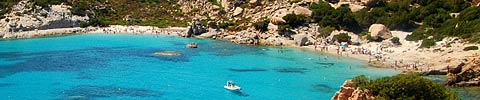
An island where nature is, inevitably, awarded the role of lead protagonist. Starting with the crystal clear sea lapping Sardinia's long sandy beaches, from the Emerald Coast with its luxurious hotels to Villasimius, from Alghero to the La Maddalena, from Asinara to the island of Sant'Antioco. Then there is the bluntly honest and obstinately reserved Sardinia, that of the shepherds and crop farmers of inland Barbagia: the Sardinia home to spectacular natural landscapes which stretch as far as the Gennargentu massif.

Sardinia is an island of truly ancient origin: the island of the Shardana, a bellicose, seafaring people, and of the Nuraghic civilization, whose temples and tombs still litter the landscapes. An island which proudly conserves its Sardo language, along with all of its most authentic popular traditions. The merging of seafaring, agricultural and pastoral traditions has resulted in Sardinia's incredibly varied cuisine and in highly-prized products such as Sardinian ewe's cheese, wafer thin "carasau" bread, powerful red wines, Myrtle liqueurs and the delicious "filu 'e ferru" grappa.

Most popular


As it winds its way through the great alluvial plains of Padana, the river Po both divides and unites the two souls of Emilia Romagna. Lush countryside, ancient cities, infinite beaches, and a love for good food and fast motorcars, all of these, together, form the colorful mosaic of Emilia Romagna.

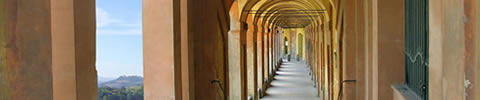
Ironically, the identity of this region, which stretches across almost the entire width of Northern Italy and, until 1947, was divided in the Longobard "Emilia" and the Roman "Romagna", lies in Emila Romagna’s incredible diversity, starting with that of its ever changing landscapes: from the flat lands of Pianura Padana, to the interminable beaches of Rimini and Riccione on the Riviera Adriatica, from the pretty little villages and towns hidden away amidst the Apennine hills, to the lagoons of the Comacchio valleys. Centuries of art and culture characterize the cities situated along the old Via Emilia, whether in Bologna, which boasts the oldest university in Europe; in Reggio Emilia, home to a magnificent neoclassical theatre; in Ravenna, famous throughout the world for its Byzantine masterpieces; or in Ferrara, the ancient dukedom of the all-powerful Estensi family.

It is said that the people of Emilia Romagna are moved by two great passions: the first for food the second for automobiles. The region's age-old gastronomic traditions include the production of prosciutto di Parma and Parmigiano Reggiano, culatello, balsamic vinegar of Modena, tortellini and sparkling Lambrusco wine. The cars and motorbikes manufactured here bear the names of Lamborghini, Maserati, Ducati, and at Maranello, in the province of Modena, the air is filled with the sound and smell of the roaring engines of Enzo Ferrari’s legendary race cars.

Most popular


Wealthy, modern, and densely populated, it was during the so-called "Economic miracle" of the 60's, and the great changes that this brought about, that Lombardy secured its dominating role in the economic growth of Italy. This, one of the peninsula's few land-locked regions, is rich in sites of great geographical and historical interest, possessing many of Italy's most impressive and, perhaps, least expected, areas of natural beauty and artistic significance: from its capital, Milan, home of designer fashion and the Scala opera house, to the elegant cities of Brescia, Bergamo, and Cremona; from its romantic lakes and the rivers which run through its valleys, to its majestic snow-topped mountains.

Most popular


Italy's Piedmont is an incredibly varied borderland region characterized by soaring massifs, immense lakes, rolling hillsides, fertile plains and historic towns and cities, the latter all filled to the brim with historic buildings, art, and ancient legends.

For much of the year carpeted by a thick layer of snow, the Alps of Piedmont have defeated all but the most intrepid of mountaineers. The more accessible mountain slopes, equipped with chair lifts and cable cars, provide a quite spectacular high altitude playground for the world’s skiers and snowboarders. Where there are mountains there are lakes and it is then, no surprise that Piedmont has so many "laghi", the largest of which is Lake Maggiore, its shores lined with sumptuous period residences, magnificent landscaped gardens, and luxury hotels. Today, it is hard to imagine how the beautiful countryside of Monferrato and Langhe, where Piedmont’s marvelous Barolo and sparkling spumante wines are produced and the venerated truffles of Alba grow, once provided the stage for some of the saddest chapters in recent Italian history. Indeed, as often brutally recounted in the works of Fenoglio and Pavese, much partisan blood was spilled in these very hills.

Piedmont and, in particular, its capital city, Turin, has always played a major role in the history and evolution of Italy. A key player in the unification of Italy, in 1861 Turin was proclaimed first capital city of the Kingdom of Italy. The city’s Lingotto car factory, once the largest in the world, became a symbol of Italian industrialization. Home to the Egyptian Museum (for many second only to that in Cairo) and to the Holy Shroud (on display in the cathedral), Turin, like other cities and towns in Piedmont, conserves both ancient memories and many, as yet unsolved, mysteries. Rooted in tradition, Piedmont is where Italy’s oldest Palio takes place; the horse race contested by the districts of Asti. Once home to the Savoy dinasty, the landscape of Piedmont is still littered with the family’s sumptuous royal residences.

Most popular


Trentino Alto Adige is located in the far North of Italy and shares borders with both Austria and Switzerland. The region’s Alpine climate ensures plenty of snow in the winter and refreshingly cool summer temperatures. This is a predominantly mountainous region, rich in alpine valleys, rivers and lakes and home to three Natural Parks: the Adamello-Brenta, Paneveggio-Pale of S.Martino and Stelvio, all of which provide the ideal habitat for numerous species of flora and fauna. The Italian Dolomites are ideal winter sports territory and, not surprisingly, Trentino boasts some of the best equipped ski resorts in Europe. The region is also home to a number of the world's finest hotels and restaurants.

Most popular


Until recently, when one thought of Veneto, one thought immediately, if not almost exclusively, of Venice, partly due to the fact that, for over eleven hundred years, Veneto was an integral part of the Serenissima's territory. Today, Veneto has established its own distinct identity and offers hospitality to numerous visitors eager to explore the many treasures of the region; from the majestic Dolomiti Mountains over which Cortina d'Ampezzo reigns supreme, to the elegant Palladian villas of Vicenza. Then there is Verona, the city of Romeo and Juliet, and home to the imposing Arena, where both important classical concerts and modern music events are performed. Veneto also boasts other splendid cities such as Treviso, Padova, Chioggia, as well as the magnificent Po delta.

Most popular


Until recently, Calabria was the chosen destination of just a few well-read and adventurous tourists travelling through Southern Italy in search of unspoilt countryside, mountains, and sea. It was in the 1980's that, on the coast of Riace, fishermen found two bronze statues, presumably representing slaves and dating back to the Hellenic period. News of the discovery quickly spread and a stream of tourists began to visit the Museo Nazionale della Magna Grecia in Reggio Calabria to admire the marvellous "Bronzi di Riace" and, as a consequence, the historical importance of the region and the clear blue seas, luscious green countryside and wooded mountain slopes of Calabria finally acquired their more then deserved world wide fame.

Most popular


Ancient stone hill villages, renaissance cities, and old fashioned seaside resorts: Italy’s Marche is a region of rich and varied landscapes where to find sandy beaches, rocky precipices, rolling hills, mysterious caves, and immense nature reserves. 
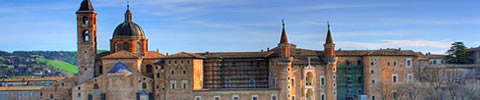
Lying between the Appenines and the Adriatic, Marche is home to cities of great architectural and artistic value, the most famous of which is the hilltop Urbino, "ideal city" and renaissance art capital created by Federico da Montefeltro. Quietly vying for tourists’ attention, Ancona, Pesaro, Ascoli Piceno and Recanati, the city of the poet Giacomo Leopardi, are all more than worthy of visit as is the university town of Macerata, which boasts a magnificent open air arena where the Sferisterio Opera Festival is held.

Most popular


Fruili is a region of Italy where to find snow even during the summer months, but also remote alpine chalets, Roman archaeological sites, long beaches, rocky coastlines, and picturesque fishing villages.

A geographically, historically and politically complex border region, over the centuries, Friuli Venezia Giulia has been invaded from every direction and by almost every bellicose population imaginable. The result are ‘Friulani’ with a multinational identity and towns with a plurality of architectural styles. The elegant Hapsburg city of Trieste, the regional capital, is the ideal place from where to head in to the Carso, a territory punctuated with karst caves, the largest of which is the 107m deep Grotta Gigante.

Most popular


Incredibly diverse landscapes, from the soft sandy beaches of the Adriatic coast to the dizzying heights of the Gran Sasso, unite the small Italian regions of Abruzzo and Molise. The Abruzzi, as Abruzzo and Molise were known until 1963, is where to experience some of Italy's wildest countryside. These sparsely populated, earthquake-prone regions are predominantly mountainous and the highest areas are best explored using the ancient sheep-driving routes, or "tratturi". A trip to the mountain villages of Pescasseroli, Sulmona, Roccoraso, or Campitello Matese should include a dish of the local lamb. From here, the seafront towns of Termoli, Ortona, and Roseto degli Abruzzi, and the historic art cities of Pescara, Aquila, and Chieti, are, amazingly, only a few kilometers away.

Most popular