

Fun & Games in Venice
Theaters, coffee houses and fairs: entertainment in the lagoon city
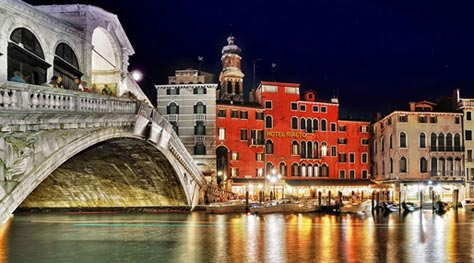
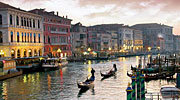
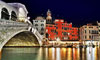
One of the four bridges to traverse the Grand Canal, the Rialto Bridge is a much-loved symbol of Venice, for centuries immortalized in paintings, picture postcards, and every genre of souvenir.
In the vicinity of the bustling Rialto market, there are any number of typical restaurants which resemble the old taverns of Venice; where the food served has the still unfamiliar aroma of the orient. Venice's cooks were, in fact, the first to introduce a series of exotic new spices to Italian cuisine.
Grand Canal Boat Tour
Venice is a city meant to be appreciated from the water, this tour is ideal for those who want to do so!
Get your tickets now!
At home with Goldoni
It was in the Rialto area; once the economic heart of the Serenissima, and a vibrant point of exchange between East and West that the Venetian playwright Carlo Goldoni was born, in an elegant Gothic edifice known as Ca' Centani.
Ca' Centani is now a small museum which recounts the life of Goldoni and investigates the main themes in his plays. In the rooms, which are furnished with 18th century antiques, stage sets are recreated, based on illustrations from the playwright's most successful works.
With their animated dialogues, Goldoni's comedies became emblems of 18th century Venice; a city whose citizens loved having fun all year round, and not only during the carnival, an event which had its heyday in the 1700's
Coffee in Venice
To experience Venice to the full, visitors should make sure they spend some time hanging out in the city's coffee houses; long established centers of cultural exchange where, once upon a time, great artists and writers would meet.
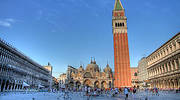
The most famous of Venice's caffè are situated overlooking St Mark's Square. It is here, in the aristocratic heart of the city, that the first coffee houses were opened; providing a place in which clients could both taste the new drink and discuss literature, poetry and, of course, politics.
From the 18th century onwards, influential writers and artists such as Foscolo, Goethe, Proust, Lord Byron, D'Annunzio, Rousseau, Stravinsky and Modigliani all whiled away the hours at the little tables of Venice's coffee houses, immersed in animated conversation or simply contemplating one of the most beautiful squares in the whole of Italy.
A number of Venice's coffee houses still conserve their original furnishings and have guest books in which many a famous name can be seen
Theaters and playgrounds
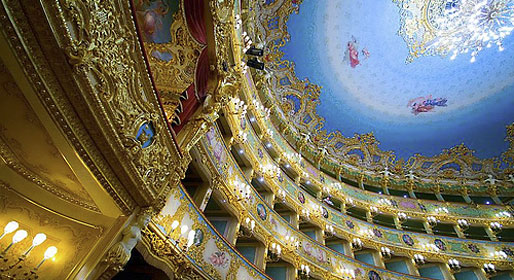
Towards the end of the 18th century, not far from St Mark's Square, Venice's Fenice Theatre was built. The edifice and its furnishings were particularly sumptuous, as had been stipulated in the rules of the 1789 competition for the project (won by the architect Giannantonio Selva), which specified that the theatre should reflect the architectural style introduced in Veneto by Palladio and Sansovino.
This building was destroyed by fire in 1836. After another devastating fire in 1996, the Fenice was rebuilt according to the 19th century designs and reopened in 2003.
La Fenice Opera House: Skip The Line + Audio Guide
Ideal for those who want to explore a fascinating Venetian theater.
Get your tickets now!
Just a few blocks away, next to Palazzo Grassi, we find Campo Santo Stefano, one of the largest open spaces in Venice. An area often used for fairs and Christmas markets, Campo Santo Stefano transforms, as if by magic, in the spring, into an improvised playground where the children of Venice meet.
Itineraries
Main destinations
Hotels in the area
- Useful links
- Venice
- Venice Hotels
- Piazza San Marco Hotels
- Venice (all hotels)