
An Italian education
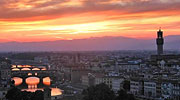
Florence, Venice, Rome, Naples: the Grand Tour of Italy
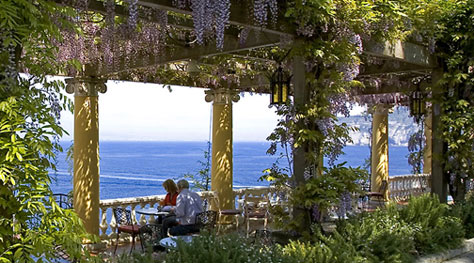
"There is certainly no place in the world where a man may travel with greater pleasure and advantage than in Italy....It is the great school of music and painting, and contains in it all the noblest productions of statuary and architecture, both ancient and modern..."
With these words in 1745 the English writer Joseph Addison described the emotional impact of the Grand Tour in Italy on his compatriots.
Educative journeys
"Grand Tour" was the name given to the educative journey which the young European elite undertook from the late 17th century and throughout the 1800's to complete their education as gentlemen: a costly exercise which involved long journeys, not without dangers and which, despite involving traveling across many different countries, always culminated in Italy.
Italy was considered a type of open-air museum, an idyllic country inhabited by poets and shepherds. Frequently, visitors who arrived with this conviction were struck by the wild nature of the countryside, by the incredible poverty of many of Italy's cities and the continual risk posed by criminality.
Instead of deterring visitors, these aspects lent an additional sense of adventure to a journey the purpose of which was to both experience Italy's unique landscapes and to make contact with unknown traditions, customs and cuisine.
Full sail... for Italy!
Often visitors traveled to Italy by sea, crossing the water from Nice or Marseilles to reach the old maritime republic of Genoa, before heading towards Florence and the rest of Tuscany.
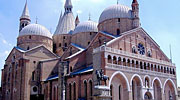
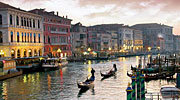
Others traveled along Italy's great waterways, sailing along the river Po and stopping off in Ferrara and Ravenna before reaching Padua and the most desirable of destinations: Venice.
Hop-on Hop-off Bus Florence
Jump on-board and travel in style between 44 must-see locations.
Get your tickets now!Hop-on Hop-off Boat Venice
See the 'City of Masks' from the water as you travel between all major hotspots.
Get your tickets now!
The interest of these "turisti ante litteram" was inspired by aspects of local history and, those able to, would pass considerable time in the towns, witnessing spectacles such as the bull race in Campo San Polo and the Festa del Redentore in Venice.
Art, archeology and the Vatican museums
The 18th century interest in antiquity catapulted travelers towards areas of archeological importance, such as the city of Rome, reached by way of the ancient via Francigena, which runs along the axes which connects the via Aurelia with the via Cassia.
Hop-on Hop-off Bus Rome
Flexible transport to all the city's sights.
Get your tickets now!
The desire to take their archeological findings back home with them led visitors (and in particular the British) to finance their own excavations. In an attempt to limit this loss of antiquities, the papacy constructed, in various phases, a large museum in which to display its own collections and other more recently acquired exhibits.
Thus the Vatican Museums became the foundation for the conservation of Italian archeology.
Vatican Museums & Sistine Chapel: Skip The Line
Michelangelo’s breathtaking frescoes and incredible artwork.
Get your tickets now!
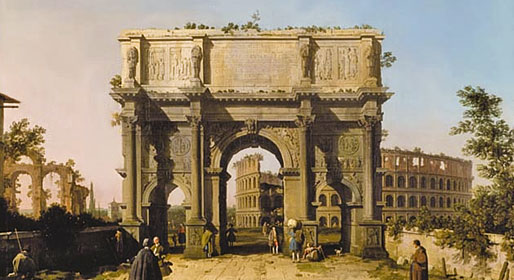
Making the most of the fashion for antiquity, numerous Italian artists, such as Canaletto, Piranesi and Batoni worked for the wealthier travelers, churning out an incredible number of works, all depicting Italy's ancient masterpieces.
Southern treasures
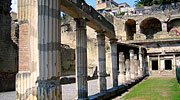
Between 1738 and 1748, with the discovery of Pompei and Herculaneum, the enthusiasm for archeology reached fever pitch; drawing scholars to Italy from every corner of the globe.
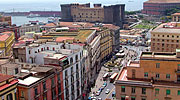
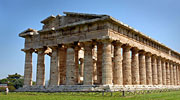
At this stage, the journey Southbound became paramount and travelers inevitably headed to Naples and on to Paestum. The visit to the temples surrounded by a natural landscape considered wild and primitive enraptured the travelers to such an extent that rivers of ink were consumed to describe it.
In the19th century the journey South became more important still and Sicily was to become the next major destination of the Grand Tour.
Pompeii & Herculaneum: Skip The Line
Visit two Roman cities destroyed by Mount Vesuvius " it's a blast!.
Get your tickets now!Hop-on Hop-off Bus Naples
See everything this UNESCO World Heritage Site has to offer with this handy pass.
Get your tickets now!Paestum: Parco Archeologico + Museo
Accedi alle rovine di un'antica città greca.
Get your tickets now!Hop-on Hop-off Bus Palermo
Esplora la capitale siciliana senza stress con questo tour in bus Hop-on Hop-off.
Get your tickets now!
A lasting love affair
Although today's globe trotters may not be subject to the same sensations of wonder experienced by the participants in the Grand Tour, an itinerary following in the footsteps of their 18th century counterparts still has its fair share of surprises, such as the park of the Villa Gregoriana in Tivoli, situated in the zone of the Baratri Tiburtini, where the river Aniene transforms into a stunning waterfall.
Villa Gregoriana
A magical place between Roman temples and the roar of the Tivoli waterfalls.
Get your tickets now!
At times the Grand Tour was a journey without return, when the traveler fell so deeply in love with a place that he decided to stay there forever
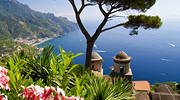
Such was the case of Lord William Beckett, who never again left his beloved Ravello, one of the jewels of the Amalfi Coast, and built an incredible villa here, mixing styles and eras, antiquities, and memories of his exotic journeys.
This is where today's exclusive Hotel Villa Cimbrone, the setting for the whirlwind love affair between Greta Garbo and Leopold Stokoswky, can be found.
Itineraries
Hotels in the area