
The Golden Mile
Nature, art, and history in the shadow of Vesuvius
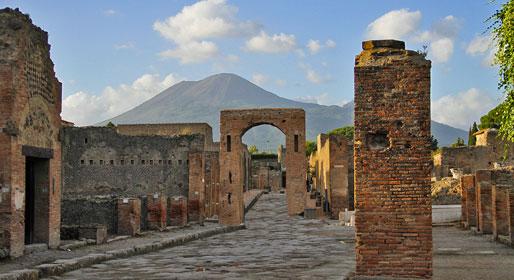
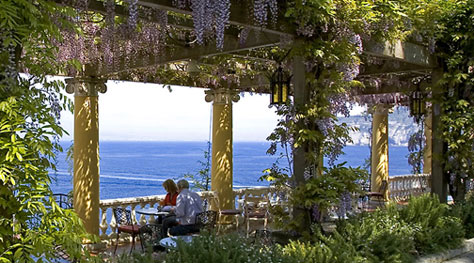

Masterpieces of the late Baroque period appear one after another along the ancient Via Regia which leads from Naples to Portici.
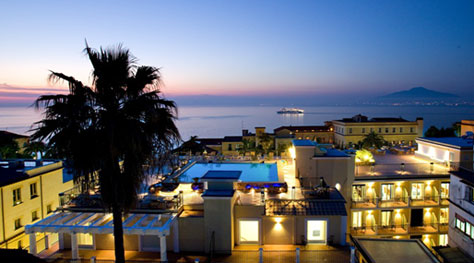
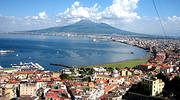
The road, known as the "Miglio d'Oro" or golden mile, accompanies us on a journey through scenery of quite incomparable beauty: in the enchanting setting of the Bay of Naples, where the great Mount Vesuvius reigns supreme.
Vesuvius: Park Entrance & Guided Visit
A scenic walk on the famous volcano that destroyed Pompeii.
Get your tickets now!
A total of some one hundred and twenty two villas form the Association of Vesuvian Villas, stunning examples of Bourbon architecture, each of which once had its own magnificent gardens or park complete with fountains, pools, pavilions, ornamental glass houses and aviaries. A number of the villas can be visited by appointment, by contacting the association.
At home in Herculaneum
In Herculaneum, visitors can partake in a guided tour of Villa Campolieto or the park of Villa Favorita.
Construction of these properties coincided with the start of excavation work on the nearby archaeological sites, in 1738
Herculaneum, gateway of the National Park of Vesuvius, is home to an incredible quantity of treasures brought to light during the digging, including the Villa dei Papiri, owned by Lucio Calpurnio Pisone, Giulio Cesare's father in law.
Herculaneum: Priority Entrance
History at the foot of Mount Vesuvius
Get your tickets now!
The name of the imposing 250 meter long edifice, was given to the building after some 1000 papyri were found here, documents now housed in the Officina dei Papyri Ercolanesi in Naples' National Library.
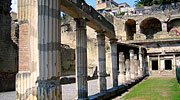
Among the most fascinating buildings, we find the Casa del Rilievo di Telefo, featuring a large columned peristyle and the beautifully conserved Terme Femminili (women's baths), this latter complete with mosaic pavement depicting marine animals.
Bath fit for a queen
At Portici, visitors can admire buildings dating back to the most ostentatiously prosperous years of the Bourbon reign: examples of which are the Palazzo Reale or Villa d'Elboeuf, better known as the Bagni della Regina (Queen's Baths). The Botanical Gardens, adjacent to the royal residence, certainly merit a visit.
The gardens, created in 1872, feature an impressive number of plant species, and a glass house filled with succulents from the American and African deserts.
Coral in the cave
Just 5kms from Portici, lies Torre del Greco, town famous for the crafting of red coral and the trading of pearls: aficionados of the art should not miss the Basilio Liverino Coral Museum, created within a lava cavity on the slopes of the volcano.
This is also where to find the Villa delle Ginestre, where Giacomo Leopardi stayed between 1836 and 1837 and composed his celebrated Ginestra.
The buried city
Pompeii, like Herculaneum, was covered in deep layer of volcanic ash during the eruption of Vesuvius in 79B.C..
The walk through this old Roman town, perfectly conserved over the centuries by a 6 meter layer of ash and lava, is of certain impact. These streets and piazzas were once the theatre of busy daily life in what was a densely populated and flourishing town.
Pompeii: Skip The Line
Explore one of the world’s best-preserved archaeological sites.
Get your tickets now!
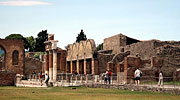
The main entrance to the town is Porta Marina. Just outside the perimeter walls, we find the Terme Surburbane and, a little further on, the Forum and monumental Basilica.
From the Porta Ercolano gateway, heading towards Via del Vesuvio, we come across the Casa degli Amorini Dorati, house thus called due to the presence of gilded cupids which embellish one of the rooms.
Many of the artefacts found in Pompei and Herculaneum are now conserved in the Naples Archaeological Museum
National Archaeological Museum of Naples
Get access to the world's oldest and most spectacular classical art.
Get your tickets now!
Itineraries
Hotels in the area