
The Via Emilia
From Parma to Piacenza: an occasion to experience the gastronomy, art, and architecture of an enchanting land.
This tour exploring the area of Emilia Romagna either side of ancient Via Emilia road, between Parma and Piacenza, begins 20 kilometers west of Parma, at Fontanellato.
Parmigiano (on the walls and on your plate)
The town of Fontanellato was built around the Sanvitale family's fortified home, one of the region's most beautiful castles. Begun in the 1200s and completed in the 1400s the moated castle houses many art treasures, including precious period paintings and antiques and a cycle of mythological frescoes by the great Parmigiano.
North east of Fontanellato, San Secondo Parmese is where the noble Counts Rossi built their fortified home.
San Secondo Parmese's castle provides a magnificent setting for medieval re-enactments and an annual Palio
French palaces, English gardens
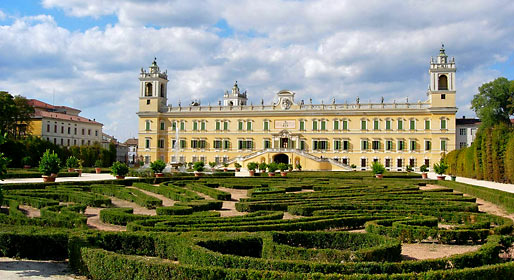
A castle of a very different sort can be seen in Colorno. The sumptuous summer residence of the Farnese, the Versailles-inspired "Reggia" was built on the site of a former castle according to the designs of the French Architect, Ennemond Alexandre Petitot.
When the French occupied the Duchy of Parma in 1807, the palace became the favorite hideaway of Napoleon's second wife, Marie Louise who personally supervised the landscaping of the grounds, and the creation of an exquisite English style garden.
Paradise on the banks of the Po
Tantamount to gourmet heaven, this area of the Po valley is famous for its gastronomic delicacies, and, in particular, its cold meats.
The foggy lowland, known as "La Bassa", provides the optimum conditions for the production of Parmigiano Reggiano cheese and culatello di Zibello - fondly referred to as the "kings of cheese and ham".
West of Zibello, along the River Po, you come to Polesine Parmese. The town is built on a "polesine"- a small island in the Po, which has become attached to the shore.
Polesine is renowned for its gastronomic delicacies - not only "culatello" and Parmigiano Reggiano but also river fish. In July, thousands gather here for the annual "Culatello" festival.
Whilst Polesine pays annual homage to "culatello", Soragna has an entire museum devoted to its most famous product - Parmigiano Reggiano, "the Majestic". The museum is located in the magnificent, perfectly preserved castle, which was once the residence of the Mell-Lupi family.
All roads lead to Rome
Back on the Via Emilia, you'll quickly reach Fidenza. The town lies on the Via Francigena, the pilgrim route which linked Canterbury and Rome. In front of the town's 12th century cathedral there is a statue of St. Simon Peter and a plaque reading "I show you the way to Rome" (believed to be the world's first road sign!).
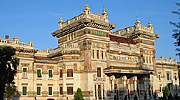
To the South of Fidenza, the spa town of Salsomaggiore Terme is famous for both its splendid Art Nouveau architecture and its therapeutic waters.
Salsomaggiore Terme's water surfaces at a temperature of 16C and has a salt density three times that of the Dead Sea!
Tabiano Bagni, close to Salsamaggiore, is another extremely popular thermal resort. The town's spa waters, which for centuries have been used to treat respiratory ailments, are incredibly rich in sulfa.
Castles and Coppa
Via the provincial road which leads from Vigoleno to Castell'Arquato, we enter the province of Piacenza.
Vigoleno, an attractive medieval village 42kms from Piacenza, became famous during the Napoleonic dominion, for the resistance of the local farm workers against the much-feared French troops.
Castell'Arquato is renowned for its Coppa Piacentina, a cylindrically shaped cold meat.
The medieval village of Rivalta Trebbia is one of the most beautifully conserved in the whole area. Its castle is open to visitors on the weekend
From Rivalta, passing by Aguzzano, we come to Pianello Val Tidone and one of the oldest fortified structures in the province of Piacenza. The Rocca d'Olgisio, dating back to 1037, enjoys a superb position dominating the Tidone and Chiarone rivers.
Itineraries
Hotels in the area