
Cilento. Living the legend
The historic hilltop villages, beautiful blue flag beaches and epic heroes of Cilento
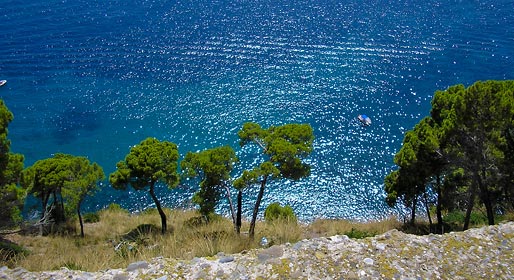
Want to take a walk on the wild side? Travel south of the Amalfi Coast to the shores of Cilento, a mountainous area in the southeast corner of Italy's Campania region.
Much of this once deserted coastline is now lined with hotels and beach resorts, but there are still extensive tracts of coast without road or habitation.
The town on the hill
We start are exploration of Cilento in Agropoli, the history of which is typical of the towns on this stretch of the Italian coast. Under constant attack from the sea, the inhabitants of the Roman settlement of Ercula sought safety on the higher ground of a promontory. "The town on the hill","Akropolis", which became Agropoli was continually refortified. Despite its turbulent past, there are still vestiges of Byzantine and even pre-Byzantine building.
From Agropoli, the SS267 road leads to the Cilento National Park and the hilltop town of Castellabate.
A beautifully preserved maze of alleyways, steps and tiny piazzas, Castellabate is now a UNESCO World Heritage Site
Presiding over the town, the 12th century castle of Abbot Constabillis looks down over the famous seaside resort of Santa Maria di Castellabate.
Peak viewing
Southwest of Castellabate, Punta Licosa is the point of departure for boats heading to the Cilento National Park's Maritime Wildlife Reserve and the island of Licosa.
Inland from Punta Licosa, the mountains rise to the highest point on the peninsular - Monte Stella. The views from the ridge and the from the beautiful Sanctuary Stella Maris on its southernmost peak are stunning.
The old man and the sea
From Punta Licosa head to Acciaroli. First mentioned in 1116 when it was called Aczarulo - meaning absence of sea storms, the town has a lovely church and Saracen towers.
It is no wonder that a weary Hemingway found the inspiration to continue his last work "The Old Man and the Sea" after staying here.
Set amongst the mountains, 170 metres above sea level, Pisciotta is a marvelous maze of medieval alleyways and historic buildings.
Pisciotta is famous for its olive oil, produced with the fruits of the century old trees which line the path to Marina di Pisciotta
Man overboard!
The popular resort of Palinuro is famous for its sandy beaches and sea caves. In Virgil's story Aeneas' helmsman, Palinurus, fell overboard here and gave the place its name.
From Palinuro, follow the rocky coastline to reach Marina di Camerota, a lively fishing harbor which is particularly popular in July and August.
Inland, on a plateau, the medieval town of Camerota boasts marvelous views of Monte Bulgheria'''. Despite being near to the touristy marina, age old traditions are still observed, including the making of ceramics.
Famous for failure
This journey along the coast of Cilento draws to a close in Sapri. Located on an inlet of the Gulf of Policastro, Sapri has been a popular holiday destination since Roman times.
The resort is famous for being the launching point for Carlo Piscane's failed attempt to oust Italy's Bourbon rulers in 1857. A statue of Piscane, looking out to sea, commemorates the event.
Itineraries
Main destinations
Hotels in the area