
Tuscan art cities
A journey from Prato to Pisa, visiting towns filled to the brim with unique works of art and architecture.
Like a necklace of precious jewels which ends in a lily shaped pendant; Tuscany is home to a string of art cities, culminating with the region's marvelous capital, Florence.
Material matters
Our tour of Tuscan art cities commences in Prato, with a visit to the Emperor's Castle, also known as the Fortress of S. Barbara or Castello Svevo, and the only example of Frederician architecture in the region.
The Romanesque-Gothic cathedral of Santo Stefano is embellished with frescoes by none other than the great Renaissance artists Paolo Uccello and Filippo Lippi.
Prato has been famous since the middle ages for the manufacture and trade of textiles, activities to which the city's Textile Museum, located in the restored Cimatoria Campolmi factory, is dedicated
Beat the blues
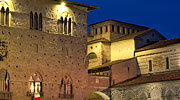
From Prato we proceed to Pistoia, a journey well worth making if only to see the city's stunning Piazza del Duomo, now used as open air venue for the annual "Pistoia Blues" music festival, held here each July.
The square once represented the heart of both the city's religious and political life and, in fact, facing on to the Piazza we find not only the city's principal house of worship, the Cathedral of San Zeno, and the Palazzo dei Vescovi, but also the Palazzo del Comune and Palazzo Pretorio.
Baths and butterflies
Having completed our tour of Pistoia, we take a relaxing break at Montecatini Terme, in one of the city's many celebrated thermal baths.
Montecatini Terme: Redi Thermal Complex
Soak in the thermal waters of a famous Italian spa town.
Get your tickets now!
Those traveling with children should be sure to visit the small town of Collodi, where the writer of Pinocchio, Carlo Lorenzini, was born.
Kids will love the Pinocchio Park, a fun park in which numerous artists have worked to recreate the Adventures of Pinocchio, and the Collodi Butterfly House, home to hundreds of butterflies, from every corner of the globe
Worship within the wall
Often referred to as the City of a Hundred Churches, Lucca is a veritable open-air museum. The most important of the city's churches is the Romanesque cathedral of San Martino, embellished with works by artists the caliber of Nicola Pisano.
Before leaving, make sure you visit Lucca's Renaissance perimeter wall, now a stunning walkway and cycle path all the way round the city.
Divine inclinations
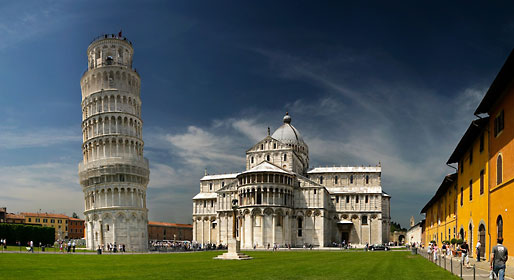
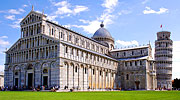
Our journey concludes in Pisa and the city's Piazza dei Miracoli. The leaning tower, which shares the square with the magnificent cathedral and baptistery, is one of Italy's best-known tourist attractions. The cathedral, built between the 11th and 12th century''' is a splendid example of Romanesque architecture.
Building of the cathedral's bell tower commenced in 1173. The tower's gravity defying inclination, was caused by the sudden subsidence of the earth beneath the tower during its construction
Leaning Tower of Pisa: Fast Track
Marvel at two marble monuments; the Leaning Tower of Pisa and the Cathedral.
Get your tickets now!
Itineraries
Hotels in the area