

Castelli Romani
From Frascati to Nemi, exploring the ancient summer residences of the noblemen of Rome
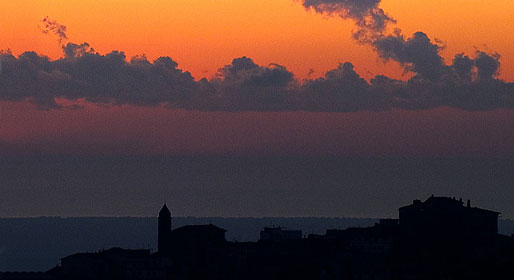
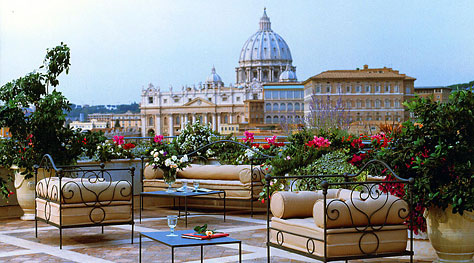
Leaving Rome and the roar of the city traffic behind us, we travel along the ancient Via Appia and Via Tuscolana roads southeast of the Italian capital to reach a series of ancient towns, better known as the Castelli Romani.
The "Roman Castles" are comprised of sixteen historic hill towns, immersed in a landscape of lakes and woods which, since the times of the Empire, when the nobility of Rome built some of their most sumptuous out-of-town retreats here, have been admired for their immense beauty, clean air, and pleasantly mild climate.
To this very day, any number of the patrician villas which once served as summer residences for Italy's aristocrats and popes, can be seen.
Frascati
Our exploration of the Castelli Romani begins in Frascati, famous for the delicious white wine produced here.
The visit to the town's 16th century Cathedral dedicated to San Pietro should not be missed. The edifice's flamboyant baroque façade was completed in the year 1700. The bell towers, one on either side of the façade, were added later. The cathedral contains a number of important works of art, and a fascinating archive of papal documents, dating from the 16th century to the present day.
Frascati is situated just moments away from the capital city and, at night, from the panoramic terrace at the entrance to the town, the lights of Rome can be clearly seen flickering in the distance
Tusculum
Just 6km northeast of Frascati, lie the ruins of the ancient settlement of Tusculum. Despite the town's Etruscan name, Tuscolo was first built as a residential area for rich Romans.
Constructed on the outer crater ring of the Alban volcano, some 610meters above sea level, the town enjoys a spectacular view of Rome, a view made all the more impressive by the presence of Tuscolo's ancient Roman acropolis, theatre, forum, and cistern.
Castel Gandolfo
From Tuscolo we head to Castel Gandolfo and the elegant summer residence of the Pope. Here we admire the work of the architect Gianlorenzo Bernini, to whom both the fountain in the main square and the baroque church of San Tommaso da Villanova have been attributed.
The 17th century Palazzo Pontificio, erected between 1624 and 1629, was built following designs by Carlo Maderno. The town's Villa Torlonia, also known by the name of Delizia Carolina, was restored in 1817 by the architect Giuseppe Valadier and features sculptures by the Danish artist Bertel Thorvaldsen (1770-1844).
Albano Laziale
One of the ancient Roman rulers' favorite summer residences, the picturesque town of Albano Laziale, overlooking the lake with which it shares its name, conserves a number of important Imperial Roman works of architecture within its medieval walls.
In the historic center, visitors can see the remains of the monumental Porta Pretoria, built between the 2nd and 3rd century B.C.
Albano Laziale's 2nd century "Cisternone" is still in perfect working order. This huge, five aisled underground cistern (with a capacity for some 10,000 cubic meters of water) was built to guarantee supplies of water for both Albano Laziale and much of the surrounding area
Ariccia, Genzano , Lariano and Nemi
The gastronomic part of our tour commences in Ariccia, where the famous "porchetta di Ariccia" is made, a delicacy which can be tasted in any of the area's typical fraschette bars.
The towns of Genzano and Lariano pride themselves on their award winning home-made bread, used to accompany other specialities made in the Castelli Romani, such as the Caciotta Romana, Pecorino Romano, and Canestrato cheeses.
Our journey draws to a close in the picturesque lakeside town of Nemi, with a slice of the town's divine Crostata di Fragolina, a jam tart made with Nemi's wonderfully sweet, wild strawberries.
Itineraries
Hotels in the area

- Useful links
- Lazio
- Rome Hotels
- Aprilia Hotels
- Lazio (all hotels)