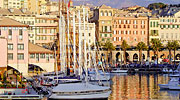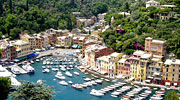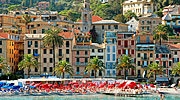
Liguria From Rapallo to Sestri Levante

The spectacular stretch of Ligurian coast between Rapallo, Zoagli, Chiavari, Lavagna and the Baia delle Favole.
This trip along the beautiful Riviera di Levante begins in the little village of San Michele di Pagana, with its sheltered beach - Prelo, on the Punta Pagana. Rising from the pines and holm oaks which cover the point is a restored Saracen tower. The tower, a reminder of a turbulent past - when this coast was under frequent attack from the sea, is one of the few to have survived unaltered.

Another link with this area's history is to be found in your next stop - Rapallo. Here the lace museum, il Museo del Merletto, in Villa Tigullio, holds more than 1400 handmade pieces of work, dating from the 16th to the 20th century. Until the end of the 19th century lace making was widespread throughout Liguria. Fishermen's wives would occupy their fingers, and their minds, making lace whilst waiting for the safe return of their menfolk. In the 17th century Eastern Liguria, and in particular this area, the Tigullio Gulf, developed an especially precious kind of lace - macramé.

Guarded by a medieval castle Rapallo was founded by the Romans - Hannibal is said to have crossed one of the town's bridges in 3rd century BC. Besides its lace shops, the town has a Baroque cathedral, a frescoed leper house, a riding centre and an excellent 18 hole golf course which has been described as 'fabulous' and also hosts many cultural events.

Perched on top of the hills behind Rapallo is the impressive Sanctuario di Montallegro. The easiest route to the sanctuary is by the cable car, a breathtaking ride at the end of which there are magnificent views of Rapallo and as far as Portofino. Around the sanctuary there are picnic places and lovely walks. The beautiful building itself, with its Neo Gothic façade, was consecrated in 1559. Legend has it that the Virgin Mary appeared to a farmer and presented him with a Greek-Byzantine icon and asked him to construct a church in which it could be housed. Along with the icon, which can be seen behind a silver screen on the altar, there are frescoes by Nicolo Barabino.

Six kilometres further south, at Zoagli, you are again reminded of the superb craft skills for which this area was renowned since late medieval times. Beautiful and precious textiles, sought after everywhere for their quality, were produced here. It is thought that Crusaders, returning from the wars, brought these skills to the Levante. Because these beautiful silks and velvets were sold by Genoese merchants, the fabrics became internationally known as "Genoese", although mainly produced in this area. For centuries the craft was passed from generation to generation but production declined from the 18th century. Few artisans now still work here but, because of their rare quality, the demand for their fabrics has never completely dwindled. The Famous Genoese velvet is still a favourite of aristocrats.

Dating from pre Roman times, Zoagli, itself, is a seaside town with attractive walks along the shore. The town has 17thcentury defensive towers and a castle, the Duca Canevaro Castle. In the church there are paintings by the pioneering, late Renaissance painter. Teramo Piaggio who was born in Zoagli and wooden sculptures by the innovative Maragliano from Genoa. As you take the panoramic road to Chiavari, you will find more art treasures in the Sanctuary of Nostra Signora delle Grazie - here there is a cycle of frescoes by Cambiaso and a carved, wooden, Flemish Madonna on the altar.

Chiavari, like Rapallo and Zoagli, has been famous since medieval times for its craftwork, not only in lacemaking and weaving but also in joinery. It was here in 1795 that the Descalzi brothers opened their famous furniture workshop. In 1807 Gaetano Descalzi designed a light, elegant, yet solid, cherrywood chair. This chair came to be known as the "Chiavarine" and continued in production throughout the century.

Situated at the mouth of the River Entella, Chiavari was an important port and trading town, from pre Roman times, for centuries. The town was fought over by the Fieschi and the Comune of Genoa and became the capital of the Tigullio area. The lively historic centre, known as "Caruggio dritto", has magnificent medieval porticos where once a month a major antique market is held. There are many stately homes, for example, the Palazzo dei Portici and the Palazzo di Giustizia and the 17thcentury Palazzo Rocca in which there is now an archaeological museum. In the 15th century cathedral there are marble colonnades and works by Ferrari and Maragliano. Beautiful, tree lined streets lead you down to the promenade and the magnificent beaches.

Continue south to explore another town which was founded by the Romans and was also an important Ligurian cultural centre in the Middle Ages, Lavagna. this city was also once ruled by the Fieschi until taken over by Chiavari in the 14th century. Today, Lavagna is an important tourist port, one of the largest in the Mediterranean, and also has a marvellous, long, straight beach. Amongst the medieval buildings in the historic centre is the 17th century College of St Stephen, with its many art treasures and the Chapel of Santa Trinità with its slate roofing so characteristic of this town. (Slate is extracted in the hills nearby and extensively used in many ways throughout the town). Each year the town recreates the medieval festival which celebrated the wedding of Opizzo Fieschi to Bianca Bianchi, during which an enormous cake is distributed amongst the crowd.

The Fieschi connection is found again close by in Cogorno. This little town, nestles in the woods and olive groves around the most important Roman Gothic building on the Riviera - the Basilica San Salvatore. Sinimbaldo Fieschi, Pope Innocent IV, was instrumental in much of the construction and decoration of this Basilica, which has a white marble and slate façade and an immense rose window.

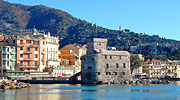
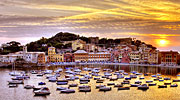
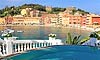
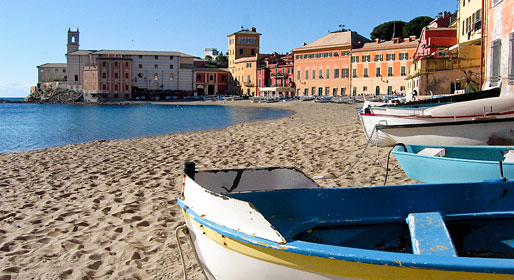
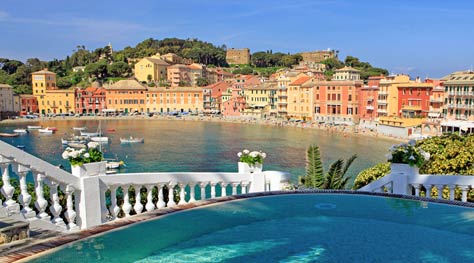
Back on the Via Aurelia, you travel on to Sestri Levante, a fishing village with beautiful golden beaches, which has become a well known tourist destination with many famous visitors. The heart of the town is built on an island, today connected to the mainland. The bays either side of the peninsular are known as the Bay of Silence and the Bay of Fables, this later was named by Hans Christian Andersen who stayed for some time here.

East of Sestri Levante is a wilderness of Mediterranean flora. Olive groves and ten kilometres of stunning cliff seascapes - the Punta Manara Regional park. The park is crossed by well marked hiking trails. The route which leads from Sestri Levante - the Gita Sestri Levante-Punta Manara - is particularly beautiful, with magnificent views of the Gulf of Silence and Sestri, it has been described as "one of the great classics".

Seaside tourism and shipbuilding intertwine in the next little town, Riva Trigoso. The fishermen of this part of the coast used to sail in robust vessels known as "leudi". These 15metre long, 4metre wide, two masted craft were used to transport goods of all sorts. These boats were built in Riva Trigoso for centuries. Later, in the 19th century a shipbuilding industry further developed here.

The sailors of both Riva Trigoso and Sestri Levante have long been known for their anchovy catch - in fact in the 19th century the first net for anchovy fishing was used here. The seafarers developed on board ship a dish that has become a Ligurian speciality - the "Bagnum". Bagnum was originally a cheap, but sustaining meal using ingredients which were to hand on board the fishing boats - oil, tomatoes, bread and (of course) anchovies. Bagnum was traditionally only eaten in summer and it is in July that here, in Riva Trigoso that there is a great Bagnum fest - the Sagra Bagnum - there is music and there are fireworks and - there is free Bagnum!


ItalyTraveller Style

Hotel Hotel Splendido - luxury hotels 5 stars Liguria Travel

Hotel Splendido

5 stars - Portofino. It's hard to imagine that the Hotel Splendido was a monastery back in the 16th century.

Hotel Palazzo Fieschi - luxury hotels 4 stars Liguria Travel

Palazzo Fieschi

4 stars - Savignone. Residence of the Savignone Family, transformed into a hotel, maintaining its historic character.

Ricetta + Vino

Hotel Grand Hotel Miramare - luxury hotels 4 stars Liguria Travel

Grand Hotel Miramare

4 stars - S. Margherita Ligure. The Grand Hotel Miramare with its large liberty style building, overlooking the promenade to...

Hotel Deals

Ricetta + Vino

Palazzo Fieschi - Savignone

However, Palazzo Fieschi doesn't mean gastronomy only. Come and dive into its atmosphere, its...