
Dante's Florence
From Porta San Gallo to the Bargello, admiring the many splendors of 13th century Florence
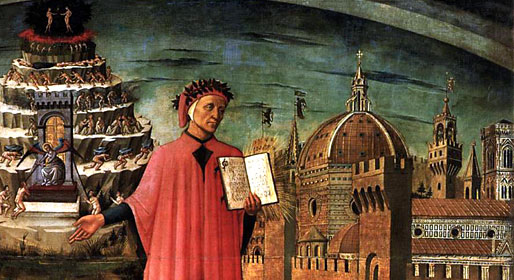
This itinerary explores Florence as Dante would have known it back in the 14th century: a flourishing and densely populated European city, fiercely contested by the Guelphs and the Ghibellines.
Our tour of the Tuscan capital commences at Porta San Gallo, opposite the Piazza della Libertà. This is one of the oldest gateways to the city, through which goods arriving from the city of Bologna passed. Its construction was ordered by Rolandino da Canossa, Guelph captain, in 1285. The two lions which adorn the structure confirm the gateway's Guelph origins. Porta San Gallo is inserted within the city's ancient perimeter walls, the construction of which began in 1282 and was entrusted to architects of great renown such as Arnolfo di Cambio, Giotto and Andrea Pisano.
Santa Maria Novella
From here we head towards one of the symbols of Florence, the church after which the city's main railway station has been named. Work on the Basilica of Santa Maria Novella was initiated in the first half of the 13th century, its white and green marble exterior offering a striking display of geometric forms.
The Basilica's Strozzi chapel is home to Nando di Cione's Last Judgment, work inspired by Dante Alighieri's Divine Commedy. Di Cione depicted the poet, standing alongside the other elected
Santa Maria Novella + Video Guide
Skip the line to the 13th-century Basilica di Santa Maria Novella for a high-tech history lesson with video guide
Get your tickets now!
Casa di Dante
The Casa di Dante, situated right in the center of Florence, documents both the life and works of the 13th century poet to whom the paternity of the Italian language has been universally attributed. In his writings, Dante indicated his Florentine residence as being sited in the same area, if not in the same palazzo, as the present day museum; next to the Church of Santa Margherita de' Cerchi, where the poet first set eyes upon his beloved Beatrice Portinari. It was here that Dante married Gemma Donati. In the same church the tomb of Folco Portinari, the father of Beatrice, is conserved, and it has not been entirely excluded that his daughter might also have been buried here.
Palazzo del Bargello
The traces left by the Guelphs and Ghibellines are most numerous in the heart of the historic center. Palazzo del Bargello, also known as Palazzo del Popolo, which once served as the city courts, today houses Florence's National Museum of Bargello. This is where to find masterpieces by Michelangelo, Luca della Robbia, Benvenuto Cellini and Donatello's magnificent David.
In the Bargello Chapel, painted by members of the Giotto School, the figure of Dante Alighieri, standing among the Elect in Paradise, can be seen.
Bargello Museum: Skip The Line
Walk around one of Florence's oldest buildings and soak up the art and history of this former barracks and 18th-century prison.
Get your tickets now!
Piazza delle Signoria
Our tour of Florence concludes with the visit to another of the city's symbols, and theater of the conflict between Guelphs and Ghibellines: Piazza della Signoria. According to Alighieri, this is where the Uberti, influential Ghibelline family, had a number of houses, demolished after the triumph of the Guelphs.
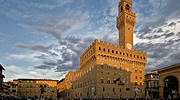
This square was chosen as administrative heart of the city, role confirmed by the construction of the 14th century Palazzo della Signoria, the realization of which was entrusted to Arnolfo di Cambio. Particularly ambitious was the architect's decision to give the imposing medieval edifice a 96m high tower. The Loggia della Signoria was built some years later.
Both the Loggia and the Piazza function as open air sculpture galleries, where to admire statues by Donatello, Michelangelo, and Cellini, to name just three of the artists to have contributed to the square's splendor
Itineraries
Main destinations
Hotels in the area