ItalyTraveller experience.

Edible Souvenirs

Edible Souvenirs

The sweet side of Sicily and Sardinia, delicious treats to take home and eat.
Whether in Sicily or Sardinia, only calorie conscious fools would miss the opportunity of indulging in a feast of sweet sticky Italian stuff, and of collecting a caseload of edible souvenirs to devour (as soon as they get) back home. To the west of the toe of the Italian peninsula, on the island of Sicily, the flamboyant forms and vibrant colors of 17th century baroque have had such a lasting influence that they have even made their way in to the island's cakes. To the north, in Sardinia, the origin and evolution of confectionery and pastries are linked to the customs and culinary traditions of the island's austere and simple pastoral communities.

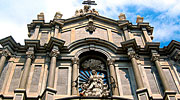
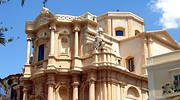
In Sicily, cake making is such a revered art that Sicilian pastry chefs often achieve celebrity status, considered eminent members of society, to be admired and respected, if not worshiped. One such renowned patissier is Corrado Assenza, who proved prophetic in his use of exclusively natural ingredients to produce his sweet masterpieces. Assenza's homebase is Caffè Sicilia, on Noto's Corso Vittorio Emaunele, just steps away from the cathedral, in what was once a small pastry kitchen owned by his aunt. From here he aims to transmit the heady baroque excitement of the city through his cakes, creams and jams, in which the quality of the ingredients used is always the top priority. Although the variety of sweet delicacies is infinite, the choice of a souvenir to pack into your bag inevitably becomes a head to head between the Crema di Pistacchio (pistachio cream) and the Marmellata di Pompelmi Rosa (pink grapefruit jam). Whilst their gifts are being wrapped, savvy customers seek sustenance in the form of a fresh cannolo and a glass of one of Assenza's crushed ice drinks.

Another name associated with Sicily's pastry-making elite is that of Salvatore Cappello who, together with his son, runs the Pasticceria Cappello (www.pasticceriacappello.it) in Via Colonna Rotta 68 in Palermo. Salvatore Cappello's love for the industry has become a family passion, resulting in heavenly chocolate based concoctions (his chocolate and coffee Kenia cake, is simply divine) and delicious variations of Palermo's traditional pastries. Not to be missed are the Sfinci di Cappello, an incredibly rich version of the traditional Sfingi di San Giuseppe, whopping great éclairs bursting with a creamy filling made with fresh ricotta cheese, chunks of chocolate, candied orange, and pinenuts.

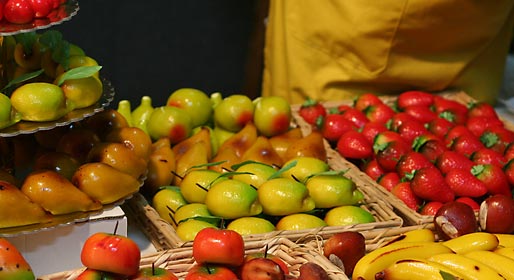
Those wishing to go home with more than the memory of the colors and flavors of the region tucked into their suitcase, should purchase a box or two of "Martorana" marzipan fruits. This delicacy was invented by Benedictine nuns who lived in the convent founded in 1193 by the noble lady Elisa Martorana. In their benefactor's honor, the nuns modeled marzipan in to the forms of Sicily's most famous fruits. The success of these preparations was such that the confectioner's corporation aspired to claim the absolute monopoly, which they managed to do in 1575, the same year in which the nuns were officially forbidden to make Fruits of Martorana, because this was an activity which distracted them from their prayers.

The history of Sicilian pastry making is based on rare items of documentary evidence, any number of colorful local legends, and entertaining personal anecdotes such as those recounted by Maria Grammatico, the Erice-born pastry chef whose life story could fill the pages of more than one block buster novel. At the age of 11, Grammatico entered a convent where the nuns baked biscuits and cakes, devoutly following age-old recipes. A few years passed and Maria came to the conclusion that life in the convent was not for her and she left, immediately putting the skills learned from the nuns to good use, by opening her first pastry shop. Today there are two points of sale, La Pasticceria di Maria and L'Antica Pasticceria del Convento, both run by the tireless Maria, who has become famous throughout, and beyond, Sicily. Of all the sweet morsels made in Erice, the Mustaccioli delle Monache, bonbons, made with sugar, almonds and cloves, are those that will most easily slip into your hand luggage. Nobody should leave Sicily without a couple of Minne di Sant Agata stowed in their suitcase. These are magnificent iced globes, each with a glace cherry on top. The Minne di San Agate, described in Tomasi di Lampedusa's The Leopard as shameless virgins cakes' were first made in memory of the gruesome martyrdom of S.Agata, (during which the patron saint of Catania's breasts were sliced off). Disconcerting as the idea of eating a saint's mammaries might be, the cakes are delicious and those which are sold in the Pasticceria Savia in via Etnea 302, made according to the original recipe, are widely considered to be the best.

Durke , the Sardinian word for sweet, is the name which Maurizia Pala chose for her patisserie in Via Napoli 66, Cagliari. Maurissa, as the locals call her, was born in Bitti, the small town in the province of Nuoro, famous for having stubbornly conserved its dialect, not far removed from Latin. Thus, it comes as no surprise to learn of Pala's determination to maintain the age-old pastry-making traditions of her home town, and to use only local products to reproduce recipes handed down from generation to generation. Today, with her creations being requested from every corner of the world, Maurissa still continues to work in the Pasticceria in Cagliari, together with her husband and five children. Among the specialties which are particularly suitable to give to those back home, and the origin of which, if asked, Maurissa is happy to describe in great detail, are the Gueffos, made with sweet almonds and orange water wrapped in colored paper, and the simple, but delectable Amarettes, concocted with a delicate mix of sweet and bitter almonds.

In Nuoro, Luisa Monne's pasticceria produces the Copulette di Orgosolo, cakes made with marzipan and honey, covered with colored icing, and sprinkled with little silver sugar balls. Another famous cake shop in Nuoro is the Antica Fabbrica del Dolce, the best place in which to savor the aranzada, made with wafer thin slices of orange peel, cooked slowly in honey and made into a mixture with flaked almonds. This ancient sweet delicacy was traditionally offered to god-parents during christenings, as part of the torradura ritual.

Sebadas are little disks of pastry, with a filling of fresh cheese, orange peel and semolina, which are fried in oil and then drizzled with bitter stawberry-tree honey. The origins of Sebada are linked to the island's pastoral tradition. The delicacy was once prepared by shepherds' wives to welcome their husbands on their return from the transumance. Given the ingredients used, Sebadas do not travel well and are best eaten in situ.

Sardinians are justifiably proud of their torrone, historically produced in the island's Barbagia region. Once upon a time, the turronargios prepared great blocks of the delicacy, made exclusively from honey, in the domestic kitchen, and sold chunks of it at the local markets. Today the capital of Sardinian torrone is Tonara, in the province of Nuoro, where the well-known Pruneddu brand is made. The Arasule is, arguably, the most highly prized type of torrone: prepared with cardoon, strawberry-tree and asphodel honey. Another delicacy is torrone aromatized with myrtle, using the berries from the bushes which grow wild in the southern part of the island.


Italian chocolate makers

Chocolate lover's Italy

Underground cities

The hidden wonders of Naples and Rome.

Street food Italian style

Street food: a delicious way to experience the culture of a land.

Great Italian walks

From Liguria to the Amalfi Coast, four of the country's most spectacular walking itineraries.

Slow trains

Unforgettable journeys through Tuscany and Sardinia, traveling along the regions' panoramic minor railway lines.

Tuff times

Sacred paths, burial grounds, and ancient cities carved out of rock.

Caffè Italia

An itinerary tracing three hundred years of history, surrounded by the irresistible aroma of Italian coffee.

Italian Nativity Scenes

From Lombardy to Sicily: the towns and villages transformed by the magic of Christmas.

Italian Theaters

Opera houses in Milan, Parma, Naples, Bari and Palermo

Six ideas for Valentine’s day

Unique ways of celebrating your love, in Italy.

Costume dramas

Origins and evolutions of Italy’s historic carnivals.

Legendary Castles

The intriguing tales of five of Italy's most beautiful castles.


Italy Traveller most popular

Cagliari

Cagliari is situated on the Southern coast of Sardinia. A large city and provincial capital,...

Noto

A Baroque masterpiece in the province of Siracusa: Noto. Such is the town's beauty that it has...

Nuoro

Nuoro lies in the heart of Sardinia, at the apex of a granite high plane surrounded by valleys,...

Palermo

The capital of Sicily, Palermo, derives its name from the Greek "panormus", meaning...


Featured.

Villa Igiea Hilton

5 stars - Palermo. Considered one between the more beautiful ten hotels in the world.

Hotel La Battigia

3 stars - Alcamo. The golden beach of Alcamo, the crystal clear Mediterranean sea, the stunning scenery of the Bay...

Special April In Sicily