
Costume dramas
Origins and evolutions of Italy's historic carnivals
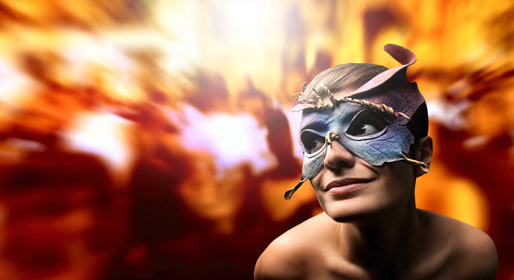
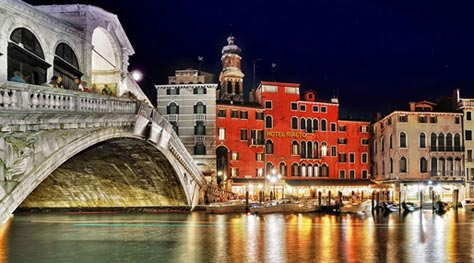
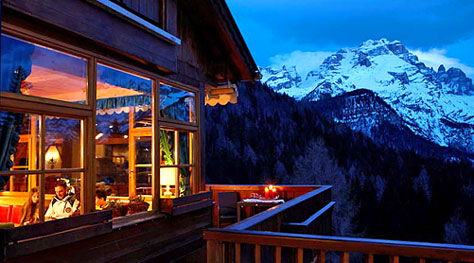
Carnival is a serious business in Italy, so serious in fact that in a number of cities it's by far the most important and anxiously awaited moment of the year, beating even Christmas and New Year! Carnival season is the perfect time to experience the history and customs of Italy and the character of its fun-loving inhabitants!
Having a ball in the mountains
Madonna di Campiglio's Habsburg Carnival offers visitors to this much loved ski resort in Trentino the opportunity to travel back in time to the 1800's and to the period when Madonna di Campiglio was the favorite destination of the Hapsburgs and the other Royal families of Europe.
Princess Sissi and the Emperor Francesco Giuseppe were particularly fond of the place and the weeklong carnival recreates the atmosphere of the Austrian court, with a series of glamorous Viennese balls, costumed parades, and processions of locals dressed as Austrian soldiers.
The highlight of Habsburg's Carnival week has to be the torch-lit ski decent, down the Pista Belvedere slope which concludes with a spectacular firework display
Living it up in the lagoon
For centuries, Carnival has been the most important week of the year in Italy's lagoon city. A document dated 1094 states how the inhabitants of Venice dedicated not days but entire weeks before the arrival of Lent to having fun.
The origins of the lagoon city's Carnival can be traced back to the ancient pagan celebrations staged to mark the end of winter and the arrival of spring, a time when all forms of entertainment were deemed legitimate and served as vital release valve, which the ruling classes used as a tool to combat social tension.
At the time of the Republic of Venice, the Carnival began much earlier than it does today, commencing on the first Sunday of October and concluding on Shrove Tuesday. The Venetians stopped working in order to dedicate their time to the celebrations, festivities which included spectacular acrobatic acts and daring performances with trained animals.
After the legendary 18th century carnivals, attended by personalities such as Giacomo Casanova, in the 19th century the Venice Carnival took on a decidedly romantic vein, attracting artists, musicians, writers and beautiful ladies from every corner of the globe
Today, during the carnival, the city transforms into an immense stage where all are welcome to enjoy themselves and play a role in the festivities. Those looking for an authentic 18th century style Venetian costume should contact the Atelier Marega, which specializes in dress hire.
Carnival Tour - The Walking Theatre Show:
Ideal for those who want to experience a storytelling tour of 15th-century Venice and its curiosities...
Get your tickets now!
Garlands and a giant omelet
Muggia, in the province of Trieste, hosts the most famous carnival in the whole of the Friuli region. The Muggia Carnival dates back to the 15th century and still features the historic Ballo della Verdura (Vegetable Ball), attended by couples adorned with floral garlands.
Other characteristics of the carnival include the abolition of face masks and the gigantic omelet which is cooked in a huge frying pan in the center of the piazza following the collection of eggs made to the chant of 'tutti a ovi'.
Fun with fruit
Colorful, boisterous, at times downright violent, the Historic Carnival of Ivrea distinguishes itself from other Italian carnivals with its symbols and libertarian origins.
By way of a series of complex rituals, the carnival commemorates the revolt of the inhabitants of Ivrea against the Marquis of Monferrato, a revolt symbolized by the figure of the Mugnaia: a miller's daughter famous for having killed the local lord who attempted to rape her.
One of the key parts in the festivities is the legendary 'battle of the oranges', which, for three whole days, rages through this medieval town in Piedmont
The battle is fought between groups of men aboard carriages (representing the aristocracy), and crowds of orange throwers on foot, (representing the masses), and involves the expenditure of vast quantities of fruit, thankfully the only weapons used.
The 'guards' are protected by padded clothing and leather masks, whilst the commoners wear the traditional red beret, the symbol of rebellion against all forms of tyranny.
Satire by the sea
The procession of floats bearing huge allegorical figures made from papier mâché, is the highlight of the Carnival of Viareggio, widely considered to be one of the most spectacular carnivals in the world.
The Viareggio carnival, which was first celebrated in 1873, was created by a group of wealthy young men, who saw the event as a novel way to protest against the excessive taxes they were being forced to pay by the local government. This idea led to the use of typical Tuscan satire and political references which characterizes many of the floats, which depict high profile figures from contemporary Italian and world politics along with classic characters from Italian Commedia dell'Arte.
The procession, which crawls its way along the town's seafront promenade, surrounded by groups of dancers and street performers, now attracts a crowd of more than 200,000 onlookers.
Pagan rituals and a country carnival
The colorful carnival of Offida, in the Marche, has a decidedly pagan feel. It starts with an ox, made from metal and wood, being transported through the streets of the town all the way to the piazza.
The town's inhabitants, dressed in the traditional 'guazzarò' or bull fighting costume, chase behind the ox, running and shouting, as if participating in an authentic Spanish corrida. At the end of the festivities, the ox is symbolically slaughtered and paraded through the town whilst the onlookers sing the Offida carnival anthem.
On Shrove Tuesday the inhabitants walk through the town, in traditional costume, holding blazing 'vlurd', big bunches of burning straw and reeds with which an immense bonfire is made to mark the carnival's conclusion.
Itineraries
Hotels in the area