Art experience.

Trapani's Pepoli Museum

Trapani's Pepoli Museum

Precious jewellery, made by Sicily's master coral artists.

The fishing and crafting of coral plays an important role in the history of Trapani. The city's coral fishermen used to live in what is today's Via Corallari. Although they fished mainly in the abundant banks of coral located close to home, they also ventured much further afield in their search for the precious material, as far as the African coast. From the 15th century onwards, and throughout the Mediterranean, the coral artists of Trapani were famous for their skill in crafting both sacred and profane objects, from crucifixes, shrines and Nativity scenes, to goblets, lamps, picture frames and jewellery: objects in which the precious coral was often mingled with gold, silver, copper, enamels, mother of pearls and lapislazuli.

Today's visitors to Trapani can admire a splendid collection of these works in the Conte Agostino Pepoli Regional Museum, housed within the city's former Carmelite Convent, dating back to the 14th century. In addition to halls in which Count Pepoli's private collection of statues and paintings are displayed, the musuem contains a number of rooms dedicated to the red art of Trapani's "mastri curaddari".

Visitors to the museum never fail to be amazed by the elaborate nativity scenes in coral, copper, enamel, silver and ivory, which the noble families of Trapani used to display in their drawing rooms so as to delight their guests. The artists responsible for these works remained largely anonymous, bar the occasional exception such as Andrea Tipa, who worked in Trapani in the early 18th century and was the author of numerous nativity scenes in which the theatrical effect of the coral was heightened further by the use of alabaster, shells and mother of pearl.

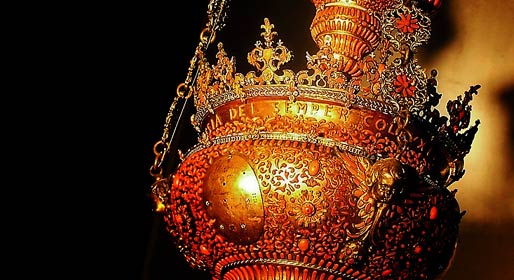
In addition to the nativity scenes, the Museum exhibits a great number of masterpieces of sacred art, including Matteo Bavera's crucifix, carved from a single block of coral, and an enormous lamp created using the retroincastro technique. This technique, which consisted in the application of small drops of coral to thin sheets of moulded metal, was abandoned in the 17th century, having been adjudicated far too time consuming and expensive.

A baroque triumph of precious stones, pearls and, of course, coral, the Pepoli family's collection of jewels includes great part of the Treasure of the Madonna of Trapani, consisting in the donations made by kings, aristocrats and simple worshippers of the much revered Sicilian Virgin.

Opening hours:
Week days: 9.00 - 13.30
Sunday and holidays: 9.00 - 12.30
Monday closed

Regional Museum "Conte Agostino Pepoli"
Via Conte Agostino Pepoli, 200
91100 Trapani
Tel: +39 0923 553269


The art of love

A romantic escape to Verona - where else?

Lagoon ghetto

Museums, multistory palazzi and synagogues - in Venice

Trentino Revisited

The lakes, castles and modern art between Rovereto and Trento.

Objects of desire (with a double G)

The art of fashion in Florence's Gucci Museum

In Vino Veritas

The history of wine and wineries in Torgiano's Wine Museum.

The image museum

The Alinari National Museum of Photography in Florence.

Paestum's temple art

A trip to Cilento to see the treasures of Magna Grecia.

Selinunte: city of gods

The temples of Selinunte: Europe's largest archeological park.

Revolutionary royal silk

San Leucio: the ancient village transformed in Royal silk factory.

Statues & Steam Engines

Rome's Centrale Montemartini museum.

Melozzo and the Renaissance

Melozzo da Forlì and the 16th century ideal of beauty.

Art in Kalsa

Palermo's Palazzo Abatellis: from Romanesque to Baroque, Sicilian style.

White Passion

Antonio Canova's Plaster Cast Gallery in Possagno.

When dreams are made of stone

Scarzuola and the ideal city of Tomaso Buzzi.

Ligurian witchcraft

The town of Triora and its museum of witches.

Sea-scaping

Genoa and the Mediterranean: from Courbet to Matisse.

Peak viewing

Centuries of art in the Sacred Mountain of Varallo.

MACRO and MAXXI

Rome looks towards the future with two hi-tech museums dedicated to contemporary art.

Piedmont's castle art

Rivoli Castle's Contemporary Art Museum.

Manta's magnum opus

The secrets of Manta Castle's stunning Late Gothic fresco.

Menhir museum

A trip to Sardinia to discover the mysterious charm of the menhir.

Temple art

Contemporary art in Agrigento's Valley of Temples

Family treasures

The Correale brothers' private art collection on public display in Sorrento.

Diefenbach Museum

The impetuous works of Karl Diefenbach in Capri's Certosa.

The Art of Devotion

A trip to Naples to see the treasure of the city's much-loved saint.

Tuff times

Sacred paths, burial grounds, and ancient cities carved out of rock.

Cardinal Passions

Baroque virtuosities in Rome's Spada Gallery.

Art Factory

The artworks collected by the King of Coats.

Contemporary art in Varese

In Villa Menafoglio, Count Panza's Collection of Art.

Umbria's Renaissance

A journey from Spoleto to Perugia, admiring some of the 16th century's greatest works of art.


Italy Traveller most popular

Alcamo

"Rosa fresca e aulentissima". With this verse the famous Sicilian poet, Ciullo...

Egadi Islands

The Egadi Islands lie off the Western coast of Sicily. These Islands have been a Marine Nature...

Marsala

Situated on Capo Boeo, the tip of Sicily, opposite the Egadi islands and Tunisia, Marsala is...

Mazara del Vallo

Without doubt, Mazara del Vallo's greatest treasure is its port. Situated at the mouth of the...

Trapani

Trapani is the most Westerly Sicilian City. Originally constructed by the Sicani, the town was...


Featured.

Club Levante

Seaside Residences - Pantelleria.

Club Levante: exclusive luxury and priceless privacy on the beautiful Sicilian island of Pantelleria.

Baglio Villa Sicilia

Historical Residences - Selinunte (Castelvetrano).

Baglio Villa Sicilia: a period residence surrounded by the history and legends of Selinunte and the Sicily of the ancient Greeks.