

Lagoon ghetto
Museums, multistory palazzi and synagogues - in Venice
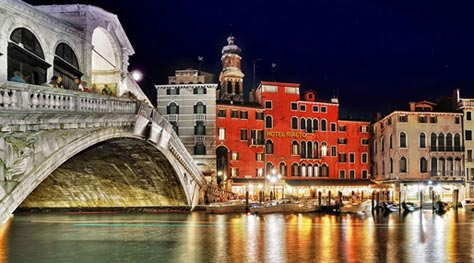
As you exit Venice's Santa Lucia railway station (traveling by train is by far the best way to reach Italy's famous lagoon city), head left and walk along the Lista di Spagna as far as Campo S.Geremia and the Guglie Bridge.
A world apart, just five minutes away from station
Cross the bridge, turn left, and enter the underpass located opposite the vaporetto stop. The entrance to the ghetto serves as symbolic boundary which visitors must cross in order to access the 'other' world, a world largely unknown to the millions of day trippers whose visit to Venice is often limited to a whirlwind tour of the Grand Canal, St Mark's Square and Rialto.
Grand Canal Boat Tour
Venice is a city meant to be appreciated from the water, this tour is ideal for those who want to do so!
Get your tickets now!St. Mark's Basilica: Skip The Line + Guided Tour
Ideal for those who want to skip the line and learn great history details of this amazing church that has been built and destroyed multiple times since the 9th century.
Get your tickets now!
Ghetto origins
Venice's Jewish ghetto is the oldest in Europe, created in 1516 when the government of the Serenissima ordered that the city's Jewish citizens should live within a circumscribed area, to which they were to be confined from sunset until sunrise.
The designated area was in the Cannaregio district, on the site of an abandoned foundry or "geto", and it is from this that the term "ghetto" derives.Today, you can still see signs of the hinges of the gates behind which the Jews were locked away at night.
Segregation was enforced until 1797, when Napoleon conquered Venice and granted the Jewish population the right to freely live in other parts of the city
Vertical Venice
Despite its name, the Campo del Ghetto Nuovo ('the new ghetto') is, actually, the oldest part of the settlement. Over the centuries, the population grew to such an extent that the only way the Ghetto could expand further was going up! Thus a series of soaring tower houses, the precursors of the modern day skyscraper, many of which were 8 stories tall- were constructed.
Museum and synagogues: Ghetto treasures
From the piazza, you can easily reach Venice's Jewish Museum. The museum visit includes a tour of the Ghetto's synagogues. Make sure you pop into the bookshop which has an impressive collection of books concerning both the Venetian Jewish community and the city of Venice itself.
Jewish Museum of Venice
Embark on a tour of Jewish history in Venice.
Get your tickets now!
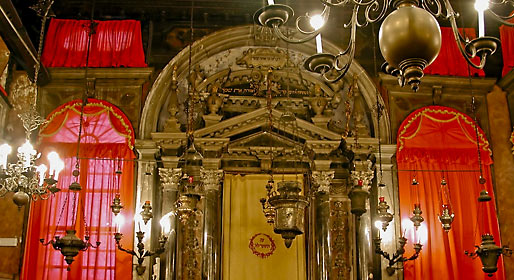
Inhabited by Jews from all over Europe, the Ghetto accommodated followers of Sephardi, Ashkenazi and Italian liturgical rituals, and constructed synagogues (or 'schools' as they were known here) accordingly. Today, the five remaining synagogues can be visited in the company of a guide.
Tours start on the hour from the Jewish Museum. In general the tour comprises three synagogues: the German, Canton and Italian synagogues, all of which are located on the top floor of three edifices in the Campo Sul Ghetto Nuovo (according to the tradition, nothing should be allowed to come between the congregation and the heavens).
Almost invisible from the outside, the interiors are incredibly ornate: with elaborate inlaid wood, sculpted panels and baroque decorative pieces. The Levantine and Spanish "schools", most probably the work of Venetian architects, are even more theatrical.
Gam-Gam and the gourmet Ghetto
No visit to Venice's Jewish Ghetto can be considered complete without having tasted some of the city's excellent kosher cuisine.
Gam-Gam, at the main entrance to the Ghetto, serves both typical Jewish specialties and Venetian-Jewish dishes such as artichoke hearts. Don't dare leave without having tried their mixed starters!
End your tour of the Ghetto on a sweet note, in the Volpe in Calle bakers shop, famous for its fruit-filled "Orecchiette di Amman", "azime dolci" doughnuts, and sugar candles
Art

Main destinations
Hotels in the area

- Useful links
- Venice
- Venice Hotels
- Venice (all hotels)